
"Low Bridge, Everybody Down!"
So who actually dug the Erie Canal? What a story!

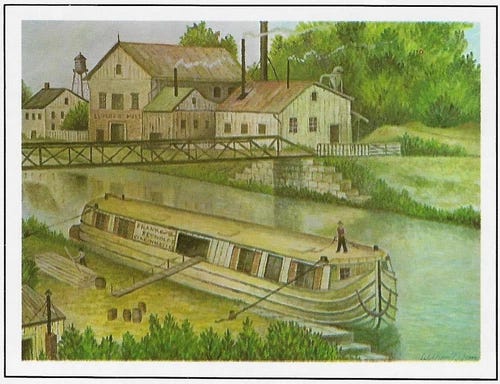
The Erie Canal is the magnum opus in the early establishment of the Empire State as the jewel of the U.S.A. Called the “greatest engineering marvel of its time,” the canal was built at a time (1825) when there wasn’t even a single civil engineer in our new nation! “Clinton’s Ditch” stretches from the Capital District to Buffalo, a watery route of 363 miles. By connecting the New York City maritime industry (via the Hudson River) to the ports of the Great Lakes (via Buffalo), this achievement’s impact of the growth of both Western New York and the nation as a whole cannot be measured.
The canal is basically a trench, dug 40-feet wide and at a maximum depth of only four feet. Just enough for the regulation-sized pack boats to troll the route bringing goods and people between east and west for the life of the canal, before railroads started competing for business transportation.
The actual digging of the Erie Canal is almost difficult to comprehend. With no engineering experience, no electricity, no computers, and no heavy equipment, the task fell to thousands of men who toiled (and died) providing the country with this new water highway.
So who did the work? Who manned the pick-axes, shovels, and other crude trenching equipment. Who were these heroes, many who died while working on the Canal in Upstate New York. Where did they come from? Are they honored anywhere? And why did more than 1,000 workers die when they reached the area around Cayuga Lake? Click below for an incredible story!
(Remember, a $5 a month paid subscription gives you all these articles with no paywall)
